설명 / Description
일관성이란 동일한 데이터 속성은 항상 동일한 시각적 처리를 받아야 하고, 시각화의 한 부분에서 확립된 규칙은 다른 모든 곳에서도 유지되어야 한다는 원칙입니다. 한 차트에서 색상이 "매출"을 의미하면, 같은 페이지의 모든 차트에서도 "매출"을 의미해야 합니다. 축 레이블이 약어 월("1월", "2월")로 포맷되어 있다면 인접 패널에서 전체 월명("January", "February")으로 바뀌면 안 됩니다. 일관성은 디자이너와 시청자 사이의 계약입니다: 인코딩을 한 번 배우고 모든 곳에 적용합니다.
이 원칙은 인지과학에 근거합니다. 시청자가 비일관성을 만날 때마다 데이터 읽기 작업을 중단하고 인코딩을 다시 학습해야 합니다. 돈 노먼(Don Norman)은 이를 "평가의 간극(Gulf of Evaluation)" — 시스템 상태를 해석하는 데 필요한 노력 — 이라고 부릅니다. 일관된 디자인은 시청자의 정신 모델이 한번 형성되면 전체 경험에서 유효하게 남기 때문에 이 간극을 최소화합니다. 비일관성은 시청자가 여러 정신 모델을 유지하거나, 더 나쁘게는 기존 모델을 새 데이터에 잘못 적용하여 오해를 초래하도록 강요합니다.
일관성은 세 가지 수준에서 작동합니다. 시각적 일관성은 동일한 색상, 형태, 폰트, 레이아웃 패턴이 전체에 걸쳐 사용됨을 의미합니다. 인코딩 일관성은 동일한 데이터 차원이 항상 동일한 시각 채널에 매핑됨(색상 = 범주, y위치 = 수량)을 의미합니다. 인터랙션 일관성은 동일한 제스처(호버, 클릭, 브러시)가 모든 뷰에서 동일한 효과를 생성함을 의미합니다. 잘 디자인된 대시보드나 보고서는 세 수준 모두에서 일관성을 달성하여 시청자가 한 번 배우고 암묵적으로 신뢰하는 통합된 시각 언어를 만듭니다.
Consistency is the principle that identical data properties should always receive identical visual treatment, and that conventions established in one part of a visualization should hold everywhere else. When a color means "revenue" in one chart, it must mean "revenue" in every chart on the same page. When axis labels are formatted as abbreviated months ("Jan", "Feb"), they should not switch to full month names ("January", "February") in an adjacent panel. Consistency is the contract between the designer and the viewer: learn the encoding once, apply it everywhere.
This principle is rooted in cognitive science. Every time the viewer encounters an inconsistency, they must interrupt their data-reading task to re-learn the encoding. Don Norman calls this "Gulf of Evaluation" — the effort required to interpret the state of a system. Consistent designs minimize this gulf because the viewer's mental model, once formed, remains valid throughout the experience. Inconsistencies force the viewer to maintain multiple mental models or, worse, to misapply an old model to new data, producing misinterpretation.
Consistency operates at three levels. Visual consistency means the same colors, shapes, fonts, and layout patterns are used throughout. Encoding consistency means the same data dimension is always mapped to the same visual channel (color = category, y-position = quantity). Interaction consistency means the same gesture (hover, click, brush) produces the same effect across all views. A well-designed dashboard or report achieves consistency at all three levels, creating a unified visual language that the viewer learns once and trusts implicitly.
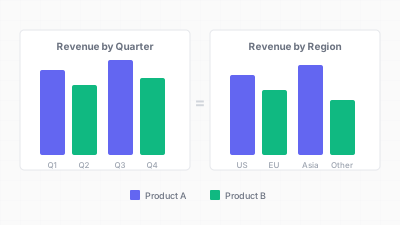
일관된 인코딩(왼쪽)과 비일관적 인코딩(오른쪽) / Consistent encoding (left) vs. inconsistent encoding (right)
핵심 아이디어 / Key Ideas
- 색상 매핑: 데이터 범주에 색상을 한 번 할당하고 모든 차트에서 재사용합니다. 첫 번째 차트에서 확립된 색상 범례가 모든 후속 차트에 적용되어야 합니다.
- Color mapping: assign colors to data categories once and reuse them across all charts. A color legend established in the first chart should apply to every subsequent chart.
- 축 규칙: 한 차트가 0 기준선을 사용하면 비교 가능한 모든 차트도 그래야 합니다. 한 차트가 로그 스케일을 사용하면 관례에서 벗어남을 명시적으로 레이블합니다.
- Axis conventions: if one chart uses a zero-baseline, all comparable charts should. If one chart uses logarithmic scale, label it explicitly so the viewer knows it departs from the convention.
- 폰트 및 스타일 일관성: 프로젝트의 모든 시각화에서 동일한 서체, 크기 스케일, 텍스트 포맷(제목에 볼드, 레이블에 보통)을 사용합니다.
- Font and style consistency: use the same typeface, size scale, and text formatting (bold for titles, regular for labels) across all visualizations in a project.
- 스몰 멀티플에서의 스케일 일관성: 모든 패널이 동일한 축 범위를 공유해야 합니다. 패널마다 스케일이 다르면 시각적 비교가 무효화됩니다.
- Scale consistency in small multiples: every panel should share the same axis range. If panels have different scales, the visual comparison is invalidated.
- 인터랙션 일관성: 대시보드에서 호버 효과, 클릭 동작, 필터링 제스처가 모든 구성 요소에서 동일하게 작동해야 합니다.
- Interaction consistency: in dashboards, hover effects, click behaviors, and filtering gestures should behave identically across all components.
- 시간 일관성: 한 뷰에서 시간 축이 "2024-Q1"로 포맷되면 다른 뷰에서 "Q1 2024" 또는 "1Q24"가 되면 안 됩니다.
- Temporal consistency: if a time axis is formatted as "2024-Q1" in one view, it should not become "Q1 2024" or "1Q24" in another.
좋은 예시 / Good Examples
- 동일 저자의 스몰 멀티플: 각 패널이 동일한 축, 스케일, 색상, 타이포그래피를 사용합니다. 시청자가 첫 패널에서 인코딩을 배우고 나머지를 쉽게 훑어봅니다.
- Small multiples by the same author: each panel uses the same axes, scales, colors, and typography. The viewer learns the encoding from the first panel and scans the rest effortlessly.
- 스타일 가이드가 있는 기업 대시보드: BBC, FT, NYT 같은 조직이 모든 출판물에 걸쳐 일관성을 강제하는 엄격한 데이터 시각화 스타일 가이드를 유지합니다.
- Corporate dashboards with a style guide: organizations like the BBC, FT, and NYT maintain strict data visualization style guides that enforce consistency across all publications.
- 연결된 뷰가 있는 인터랙티브 대시보드: 한 차트에서 막대를 클릭하면 다른 모든 차트에서 동일한 색상과 강조 스타일로 해당 데이터가 하이라이트됩니다.
- Interactive dashboards with linked views: clicking a bar in one chart highlights the corresponding data in all other charts using the same color and emphasis style.
- 연구 논문의 차트 시리즈: 모든 그림에 걸쳐 일관된 색상 코딩, 축 포맷, 차트 크기가 독자로 하여금 섹션 간 결과를 비교할 수 있게 합니다.
- Series of charts in a research paper: consistent color coding, axis formatting, and chart dimensions across all figures allow the reader to compare results across sections.
안티 패턴 / Anti-Patterns
- 다른 의미에 색상 재사용: "파란색"이 한 차트에서 "남성"이고 인접 차트에서 "1분기 매출"이면, 시청자의 정신 모델이 깨집니다.
- Color reuse for different meanings: "blue" means "male" in one chart and "Q1 revenue" in the adjacent chart. The viewer's mental model breaks.
- 비일관적 축 범위: 같은 지표를 보여주는 두 나란한 차트에서 y축 스케일이 다릅니다. 시청자는 공유 스케일을 가정하고 잘못된 결론을 도출합니다.
- Inconsistent axis ranges: two side-by-side charts showing the same metric but with different y-axis scales. Viewers assume shared scales and draw incorrect conclusions.
- 같은 데이터 유형에 혼합된 차트 유형: 하나의 시계열을 꺾은선 그래프로, 동등한 시계열을 같은 페이지에서 막대 차트로 보여주면서 명확한 이유가 없는 경우.
- Mixed chart types for the same data type: showing one time series as a line graph and an equivalent time series as a bar chart on the same page without a clear reason.
- 직접 레이블과 범례 간 전환: 한 차트는 선 위에 직접 시리즈명을 레이블하고, 다음 차트는 시청자에게 범례 교차 참조를 요구합니다. 인터랙션 비용이 비일관적입니다.
- Switching between direct labeling and legends: one chart labels its series directly on the lines; the next requires the viewer to cross-reference a legend. The interaction cost is inconsistent.
- 레이블의 형식 비일관성: "$1.2M"이 한 차트, "1,200,000 USD"가 다른 차트, "1.2 million dollars"가 세 번째 차트. 시청자가 형식을 정신적으로 정규화해야 합니다.
- Format inconsistency in labels: "$1.2M" in one chart, "1,200,000 USD" in another, and "1.2 million dollars" in a third. The viewer must normalize formats mentally.
- 차트별로 다른 호버 동작: 한 차트에서 호버하면 툴팁이 나타나고, 다른 차트에서는 시리즈가 하이라이트되고, 세 번째에서는 아무 반응이 없습니다. 시청자가 인터페이스에 대한 신뢰를 잃습니다.
- Different hover behavior across charts: hovering shows a tooltip in one chart, highlights a series in another, and does nothing in a third. The viewer loses trust in the interface.
더 읽어보기 / Further Reading
- Munzner, T. (2014). Visualization Analysis and Design. CRC Press.
- Few, S. (2006). Information Dashboard Design: The Effective Visual Communication of Data. O'Reilly Media.
- Norman, D. (2013). The Design of Everyday Things (revised ed.). Basic Books.
- Schwabish, J. (2021). Better Data Visualizations. Columbia University Press.