Observable Framework
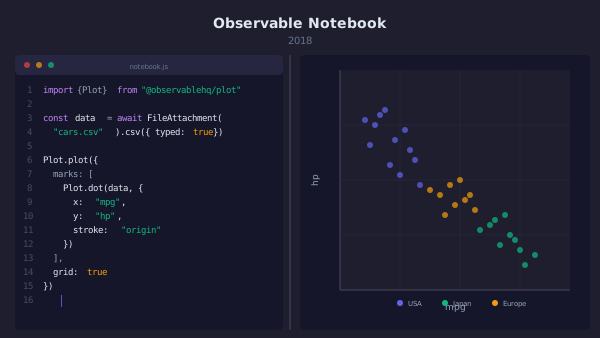
Historic2024년에 출시된 옵저버블 프레임워크(Observable Framework)는 마이크 보스톡(Mike Bostock)이 웹 기반 데이터 중심 문서를 만드는 도구를 발전시켜온 최신 성과였습니다. 프로토비스(Protovis, 2009), D3.js(2011), 옵저버블 노트북(Observable Notebooks, 2018)을 거쳐, 프레임워크는 정적 사이트 생성기 방식을 취했습니다: JavaScript 데이터 로더와 반응형 코드 블록을 포함한 마크다운을 작성하면 빠르고 배포 가능한 대시보드를 얻을 수 있습니다.
Observable Framework, released in 2024, represented Mike Bostock's latest evolution of the tools for building data-driven documents on the web. After creating Protovis (2009), D3.js (2011), and Observable Notebooks (2018), Framework offered a static-site-generator approach: write Markdown with embedded JavaScript data loaders and reactive code blocks, and get a fast, deployable dashboard.
프레임워크는 이 분야의 근본적인 긴장을 해결했습니다: 노트북은 탐색에는 훌륭하지만 프로덕션 대시보드에는 적합하지 않고, 전통적인 웹 프레임워크는 데이터 중심 페이지에 지나치게 많은 보일러플레이트를 요구합니다. 프레임워크는 그 절충점을 찾았습니다 — 데이터 로더는 빌드 시점에(Python, R, SQL, 셸 등 어떤 언어로든) 실행되고, 클라이언트는 옵저버블 플롯(Observable Plot)으로 반응형 시각화를 렌더링합니다.
Framework addressed a fundamental tension in the field: notebooks are great for exploration but poor for production dashboards, while traditional web frameworks require too much boilerplate for data-heavy pages. Framework split the difference — data loaders run at build time (any language: Python, R, SQL, shell), while the client renders reactive visualizations with Observable Plot.
이는 2024년 기준 데이터 시각화가 어떻게 작성되어야 하는지에 대한 최신 기술 수준을 보여줍니다: 선언적이고, 여러 언어를 아우르며, DOM 조작이 아니라 데이터 변환 관점에서 사고하는 분석가 겸 개발자에게 최적화되어 있습니다.
It represents the state of the art in 2024 for how data visualization should be authored: declarative, polyglot, and optimized for the analyst-developer who thinks in data transformations rather than DOM manipulation.