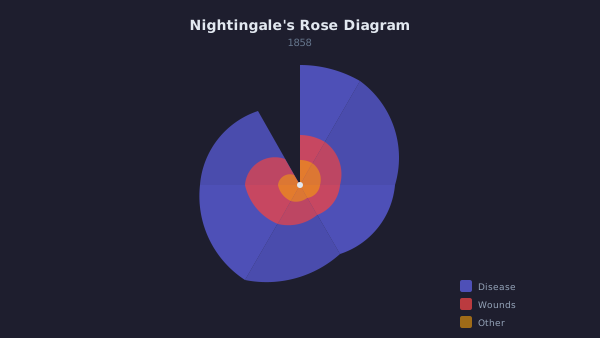
Diagram of the Causes of Mortality in the Army in the East
Historic플로렌스 나이팅게일(Florence Nightingale)의 극좌표 면적 다이어그램(흔히 "로즈 다이어그램" 또는 "콕스콤 차트"라고 불립니다)은 데이터 기반 옹호 활동의 혁명적인 사례였습니다. 1858년에 제작된 이 다이어그램은 크림 전쟁 당시 영국군 사망자 중 전투 부상(빨강)이나 기타 원인(검정)보다 예방 가능한 질병(파랑)으로 인한 사망이 훨씬 많았음을 보여주었습니다.
Florence Nightingale's polar area diagram (often called the "rose diagram" or "coxcomb chart") was a revolutionary act of data-driven advocacy. Created in 1858, it showed that far more British soldiers died from preventable diseases (blue) than from battle wounds (red) or other causes (black) during the Crimean War.
나이팅게일이 이 차트 유형을 처음 사용한 것은 아니었습니다 — 앙드레미셸 게리(André-Michel Guerry)가 이전에 비슷한 형태를 사용한 바 있습니다 — 하지만 이를 정치적 도구로 활용한 것은 그녀가 처음이었습니다. 나이팅게일은 이 다이어그램을 빅토리아 여왕과 국회의원들에게 직접 보내, 군 병원 위생 환경의 전면적인 개혁을 이끌어냈습니다.
Nightingale was not the first to use this chart type — André-Michel Guerry had used similar forms earlier — but she was the first to weaponize it politically. She sent the diagrams directly to Queen Victoria and Members of Parliament, leading to sweeping reforms in military hospital sanitation.
이러한 디자인 선택은 의도적인 것이었습니다: 파이 차트로도 수학적으로는 표현이 가능했겠지만, 방사형 면적 형태가 비전문가 대중에게는 더 극적이고 직관적으로 다가왔습니다. 이는 데이터에 맞는 시각화를 고르는 것만큼이나 대상 독자에 맞는 시각화를 고르는 것이 중요하다는 사실을 입증했습니다.
The design choice was deliberate: a pie chart would have worked mathematically, but the radial area form was more dramatic and intuitive for her non-technical audience. It proved that choosing the right visualization for your audience is as important as choosing the right one for your data.