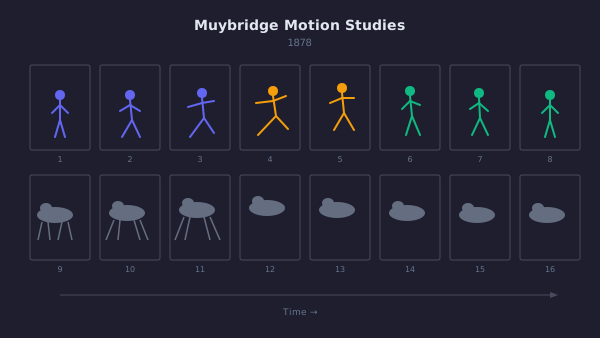
The Horse in Motion
Historic에드워드 마이브리지(Eadweard Muybridge)가 1878년에 촬영한 질주하는 말의 연속 사진은 오랜 논쟁을 종식시켰습니다: 말이 달릴 때 네 발굽이 동시에 땅에서 떨어지는 순간이 있는가? 연속 사진을 통해 밝혀진 답은 "그렇다"였습니다.
Eadweard Muybridge's 1878 photographic sequence of a galloping horse settled a long-standing debate: does a horse ever have all four hooves off the ground simultaneously? The answer, revealed through sequential photography, was yes.
전통적인 의미의 데이터 시각화는 아니지만, 마이브리지의 작업은 시간에 따른 데이터에 스몰 멀티플 원칙을 적용한 사례를 확립했습니다 — 정렬된 프레임들의 연속을 통해 변화를 보여주는 방식입니다. 훗날 에드워드 터프티(Edward Tufte)는 이를 이 기법의 대표적인 사례로 인용했습니다.
While not a data visualization in the traditional sense, Muybridge's work established the principle of small multiples applied to temporal data — showing change through a sequence of aligned frames. Edward Tufte later cited it as a foundational example of this technique.
이 연작은 또한 시각화가 육안으로는 보이지 않는 진실을 드러낼 수 있다는 발상을 개척했습니다. 인간의 눈은 질주하는 말의 움직임을 정확히 분해해 볼 수 없지만, 체계적인 시각 기록은 그것을 가능하게 합니다. 시각화가 보이지 않는 것을 보이게 만든다는 이 원칙은 오늘날에도 이 분야의 핵심으로 남아 있습니다.
The series also pioneered the idea that visualization could reveal truths invisible to the naked eye. The human eye cannot resolve the motion of a galloping horse, but a systematic visual recording can. This principle — that visualization makes the invisible visible — remains central to the field today.