Descriptive Map of London Poverty
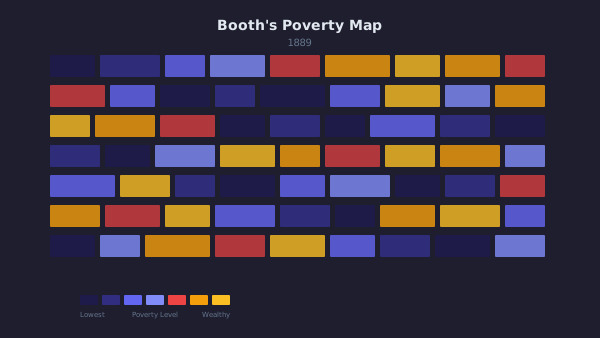
Historic찰스 부스(Charles Booth)의 런던 빈곤 지도는 1886년부터 1903년 사이에 제작되었으며, 런던의 모든 거리를 주민의 소득과 사회 계층에 따라 색칠했습니다. 일곱 가지 색상 체계는 검정("최하층 계급. 부도덕하고 반범죄적")에서 짙은 파랑, 옅은 파랑, 보라, 분홍, 빨강을 거쳐 노랑("중상류 및 상류 계급. 부유층")까지 이어졌습니다.
Charles Booth's poverty map of London, produced between 1886 and 1903, colored every street in London according to the income and social class of its inhabitants. The seven-color scheme ranged from black ("Lowest class. Vicious, semi-criminal") through dark blue, light blue, purple, pink, and red to yellow ("Upper-middle and upper classes. Wealthy").
이 지도는 방대한 가가호호 조사와 경찰 인터뷰를 기반으로 제작되었으며, 당시 사회 연구로서는 전례 없는 수준의 경험적 엄밀함을 보여줍니다. 그 결과물인 시각화는 빈곤을 추상적 통계가 아니라 지리적 패턴으로 눈에 보이게 만들었습니다.
The maps were based on exhaustive door-to-door surveys and police interviews — a level of empirical rigor unprecedented for social research at the time. The resulting visualization made poverty visible as a geographic pattern rather than an abstract statistic.
부스의 작업은 영국의 노령 연금 제도 도입에 직접적인 영향을 미쳤습니다. 이는 시각화가 사회 정책의 근거 자료로 기능할 수 있음을 입증했으며, 이 전통은 오늘날의 데이터 저널리즘과 인도주의적 시각화로 이어지고 있습니다.
Booth's work directly influenced the establishment of old-age pensions in Britain. It demonstrated that visualization could serve as evidence for social policy — a tradition that continues in modern data journalism and humanitarian visualization.